Commercial Lease Abstract Example + Free Template
By LeaseBoss · August 26, 2026 · 16 min read
Quick answer
A commercial lease abstract is a structured summary of the important terms in a lease. Below is a full example, plus a free Excel template you can download and fill in for your own leases.
A commercial lease can easily run 50, 75, or more than 100 pages.
Most of the time, you don't need all 100 pages.
You need to know the rent. The expiration date. Whether there is a renewal option. Who pays for HVAC repairs. When the next rent increase happens. How much notice is required before exercising an option.
That's the purpose of a commercial lease abstract.
A lease abstract takes the important information buried throughout a lease and organizes it into a structured summary that is much easier to reference.
If you need to create one yourself, this guide includes a complete commercial lease abstract example along with a free template you can copy and use for your own leases.
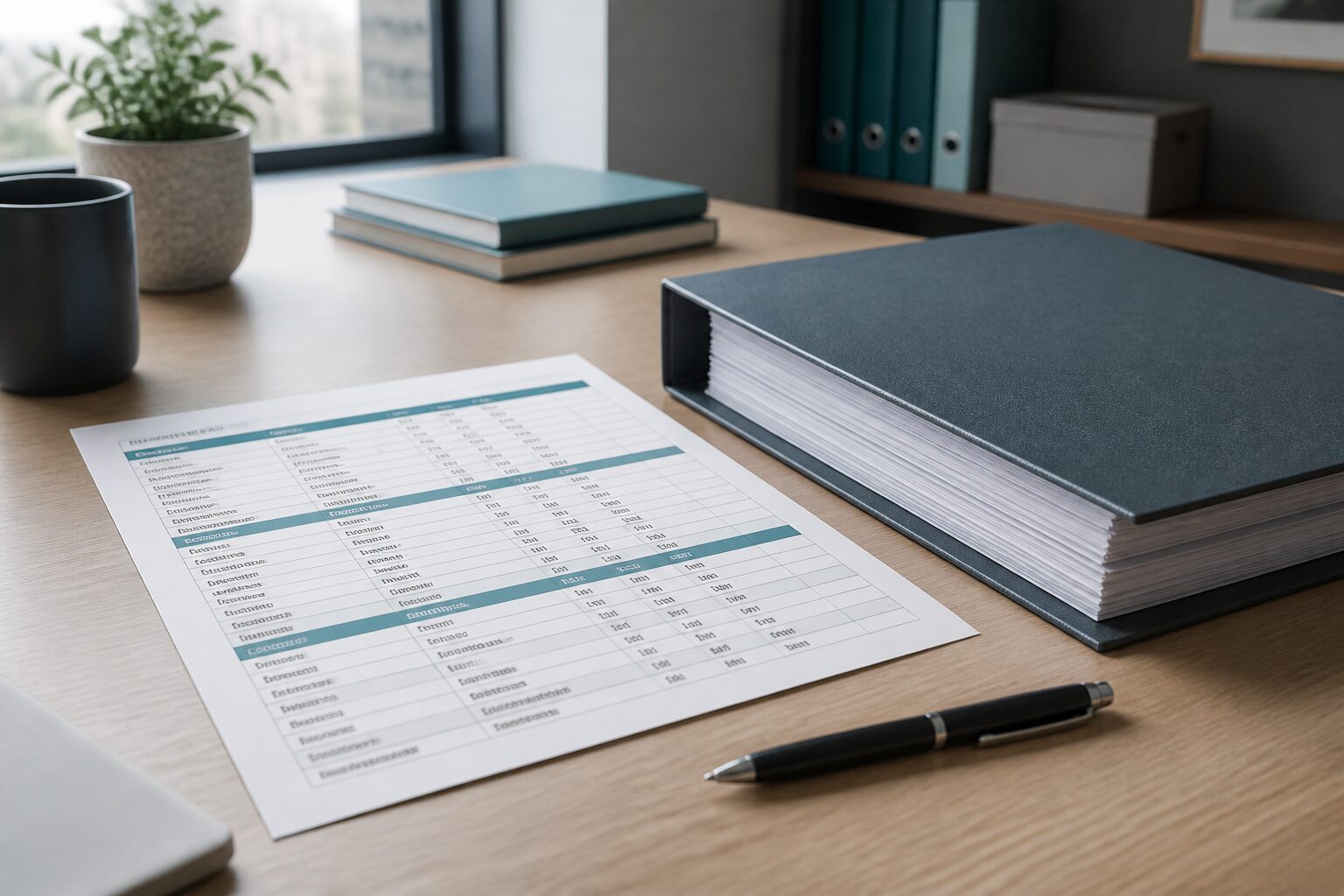
Excel (.xlsx). Blank fields ready to fill for office, retail, industrial, and other commercial leases.
For the broader process behind turning PDFs into structured fields, see What Is Lease Abstraction?.
What Is a Commercial Lease Abstract?
A commercial lease abstract is a structured summary of the important financial, legal, and operational terms contained in a commercial lease.
Think of it as a reference document for the lease.
Instead of opening a 90-page PDF every time you need to check the expiration date or renewal notice period, you can look at the abstract.
A lease abstract does not replace the lease itself. The signed lease and its amendments remain the authoritative documents.
The abstract simply makes the information inside those documents easier to find and manage.
A typical commercial lease abstract includes information such as:
- Landlord and tenant
- Premises
- Square footage
- Lease commencement date
- Rent commencement date
- Expiration date
- Base rent
- Rent escalations
- Operating expenses
- Security deposit
- Renewal options
- Termination rights
- Assignment and subletting provisions
- Maintenance responsibilities
- Insurance requirements
- Critical notice dates
Exactly what you include will depend on the lease and how your organization uses the abstract.
Commercial Lease Abstract Example
Let's look at a fictional example.
Assume Acme Analytics, Inc. leases office space from Riverfront Properties, LLC in a multi-tenant office building.
The lease is 78 pages long and includes one amendment.
After reviewing the lease documents, the completed abstract might look something like this.
General Lease Information
| Field | Abstracted Information |
|---|---|
| Landlord | Riverfront Properties, LLC |
| Tenant | Acme Analytics, Inc. |
| Property | Riverfront Center |
| Property Address | 1000 River Street, Portland, OR 97201 |
| Premises | Suite 400 |
| Rentable Square Feet | 18,500 RSF |
| Lease Type | Office |
| Lease Execution Date | March 15, 2026 |
| Lease Effective Date | April 1, 2026 |
| Lease Commencement Date | June 1, 2026 |
| Rent Commencement Date | September 1, 2026 |
| Lease Expiration Date | May 31, 2036 |
| Initial Lease Term | 10 years |
Already, the abstract makes something important obvious.
There are four different dates associated with the beginning of this lease.
The lease was signed in March, became effective in April, commenced in June, and rent did not begin until September.
If all of those dates were entered into a spreadsheet as simply "lease start date," important information would be lost.
For why those four dates are not interchangeable, see Lease Commencement Date vs. Effective Date vs. Execution Date.
Base Rent Schedule
The lease provides for annual increases in base rent.
The abstract might show the schedule like this:
| Period | Monthly Base Rent | Annual Base Rent |
|---|---|---|
| Jun. 1, 2026 to Aug. 31, 2026 | $0* | $0* |
| Sep. 1, 2026 to May 31, 2027 | $64,750 | $777,000 |
| Jun. 1, 2027 to May 31, 2028 | $66,693 | $800,316 |
| Jun. 1, 2028 to May 31, 2029 | $68,694 | $824,328 |
| Jun. 1, 2029 to May 31, 2030 | $70,755 | $849,060 |
*The first three months of the lease term are subject to base rent abatement.
The full abstract would continue the rent schedule through the end of the lease term.
This is much easier to reference than finding the base rent section of the lease and recalculating the increases every time someone needs the information.
Operating Expenses
The lease also requires the tenant to pay its share of certain property operating expenses.
An abstract could capture:
| Field | Abstracted Information |
|---|---|
| Expense Structure | Base Year |
| Base Year | Calendar year 2026 |
| Tenant Pro Rata Share | 12.5% |
| Expense Cap | 5% annual cap on controllable operating expenses |
| Real Estate Taxes | Included in operating expenses |
| Insurance | Included in operating expenses |
| Reconciliation | Annual |
If the lease contains exclusions from operating expenses, those may also be worth summarizing depending on how the abstract will be used.
Security Deposit
| Field | Abstracted Information |
|---|---|
| Security Deposit | $125,000 |
| Form | Letter of Credit |
| Initial Expiration | June 30, 2027 |
| Reduction | Reduces to $75,000 after Year 3 if Tenant is not in default |
| Issuing Bank Requirements | As specified in Section 5.4 |
This is a good example of why simply recording "$125,000 security deposit" might not be enough.
The form of the security, expiration date, and reduction conditions could all require future action.
Renewal Options
The tenant has two options to extend the lease.
| Field | Abstracted Information |
|---|---|
| Number of Options | 2 |
| Option Term | 5 years each |
| Notice Requirement | 9 to 12 months before expiration |
| Renewal Rent | Fair Market Rent |
| Conditions | Tenant must not be in default at exercise or commencement of renewal term |
Because the original term expires May 31, 2036, the notice window for the first renewal option would need to be calculated and tracked well before the expiration date.
This is exactly the type of provision that can become a problem if a team only tracks lease expiration.
Assignment and Subletting
The lease requires landlord consent for most assignments and subleases, subject to certain permitted transfers.
The abstract might read:
Assignment/Subletting: Landlord's prior written consent required, not to be unreasonably withheld, conditioned, or delayed. Certain transfers to affiliates and transfers resulting from merger or sale of substantially all tenant assets are permitted subject to conditions in Section 14.
Notice how the abstract doesn't attempt to rewrite every word of the provision.
The goal is to capture the important business terms while preserving a reference to the actual lease section for situations requiring closer review.
Maintenance and Repair
| Responsibility | Party |
|---|---|
| Interior Premises | Tenant |
| HVAC Maintenance | Tenant |
| HVAC Replacement | Landlord, subject to lease terms |
| Structural Components | Landlord |
| Roof | Landlord |
| Common Areas | Landlord |
| Janitorial | Tenant |
For property managers, this section can save a surprising amount of time.
When something breaks, the first question is often very simple:
Who is responsible for this?
Insurance
The lease requires the tenant to maintain several types of insurance.
The abstract could include:
- Commercial general liability insurance
- Property insurance
- Workers' compensation coverage
- Automobile liability coverage, if applicable
- Landlord and property manager named as additional insureds where required
- Certificates of insurance provided before occupancy and upon renewal
Specific limits should also be included when they are important to the team using the abstract.
Critical Dates
One of the most useful sections of a lease abstract is a consolidated list of dates that require attention.
For our fictional lease:
| Critical Date | Date |
|---|---|
| Lease Commencement | June 1, 2026 |
| Rent Commencement | September 1, 2026 |
| First Rent Increase | June 1, 2027 |
| Letter of Credit Expiration | June 30, 2027 |
| Security Reduction Eligibility | June 1, 2029 |
| Earliest Renewal Notice | May 31, 2035 |
| Latest Renewal Notice | August 31, 2035 |
| Lease Expiration | May 31, 2036 |
This is where lease abstraction becomes more than document summarization.
The abstract turns contractual language into information that can actually be tracked.
Free Commercial Lease Abstract Template
If you're creating your own lease abstract, download the Excel template below and use it as a starting point.
Not every field applies to every lease. Add or remove fields based on property type and what your team needs to track.
The template includes blank sections for basic information, dates, rent, operating expenses, security, options, assignment, maintenance, insurance, other provisions, and a critical-date tracker.
How to Abstract a Commercial Lease
Having a template is the easy part.
Filling it out accurately is where the work begins.
1. Gather the Entire Lease File
Start with more than the original lease.
Look for:
- Original lease
- Amendments
- Addenda
- Exhibits
- Commencement certificates
- Assignment agreements
- Renewal agreements
- Expansion agreements
- Side letters
- Guaranties
- Other documents that modify the lease
This matters because the newest document may change something contained in an older one.
A rent schedule in the original lease, for example, might no longer be valid after an amendment.
2. Identify the Basic Lease Terms
Start with the information that establishes the lease relationship:
- Parties
- Premises
- Square footage
- Execution date
- Commencement date
- Expiration date
- Lease term
Don't assume similarly named dates mean the same thing.
A lease can have separate execution, effective, commencement, possession, and rent commencement dates.
3. Build the Rent Schedule
Locate the base rent provisions and identify every change in rent during the term.
Watch for:
- Fixed increases
- Percentage increases
- CPI adjustments
- Free rent
- Rent abatement
- Different rates for expansion space
If an amendment changes the rent schedule, the abstract should reflect the current agreement rather than blindly copying the original schedule.
4. Find Every Option and Deadline
Search for provisions involving:
- Renewal
- Extension
- Termination
- Expansion
- Contraction
- Purchase rights
- Rights of first offer
- Rights of first refusal
Then identify both the right itself and the deadline for exercising it.
Knowing that a tenant has a renewal option isn't very helpful if nobody knows when notice must be given.
5. Review Operating Expense Obligations
Identify what the tenant is required to pay in addition to base rent.
Depending on the lease, this might include:
- CAM
- Taxes
- Insurance
- Utilities
- Management fees
- Administrative fees
Pay attention to caps, exclusions, base years, and other limitations.
6. Capture Operational Responsibilities
Who repairs the HVAC?
Who replaces it?
Who maintains the roof?
Who handles plumbing inside the premises?
These questions often matter long after the lease is signed, which makes them useful information to include in an abstract.
7. Record the Source
Whenever possible, record where important information came from.
For example:
Renewal Option: Two 5-year options
Source: Section 32.2, Lease
Or:
Base Rent: Revised schedule
Source: Section 3, Second Amendment
That makes it much easier for someone to return to the original language when necessary.
8. Review the Abstract Against the Lease
Finally, verify the abstract.
Dates, dollar amounts, percentages, notice periods, and options deserve particular attention.
A lease abstract is useful because people rely on it. That also means incorrect information can spread quickly if the abstract isn't reviewed.
Lease Abstract Template vs. Lease Abstraction Software
You can absolutely abstract commercial leases manually.
For a small number of leases, a spreadsheet and a good template may be all you need.
The challenge appears when the portfolio grows.
If you have 100 leases and each lease takes even an hour to review and abstract, that's 100 hours before considering amendments, quality control, data entry, and future updates.
And once the abstracts exist, they still have to be maintained.
That is why lease abstraction software has become increasingly useful for commercial real estate teams.
Instead of starting with an empty spreadsheet and manually hunting through every page of a lease, software can help identify and structure important information for review.
The human still verifies what matters.
The tedious part becomes much faster.
What Makes a Good Lease Abstract?
A good lease abstract isn't necessarily the longest one.
It is the one that gives the people managing the property or portfolio the information they actually need.
It should be:
- Accurate. The abstract should reflect the current lease documents, including amendments.
- Structured. Similar information should be recorded consistently across leases.
- Easy to scan. Someone shouldn't have to read another 20-page document to understand the abstract.
- Traceable. Important information should point back to the relevant lease provision when possible.
- Actionable. Dates and obligations that require future action should be easy to identify.
The goal isn't to rewrite the lease.
The goal is to make the lease usable.
Frequently Asked Questions
What is a lease abstract?
A lease abstract is a structured summary of important terms contained in a lease. It commonly includes dates, rent, options, operating expenses, maintenance responsibilities, insurance requirements, and other important provisions.
What should be included in a commercial lease abstract?
A commercial lease abstract typically includes basic lease information, important dates, base rent, operating expenses, renewal and termination options, security requirements, assignment provisions, maintenance responsibilities, insurance requirements, and critical deadlines.
The exact fields depend on the property type and how the abstract will be used.
Is a lease abstract the same as a lease?
No. A lease abstract summarizes information contained in the lease. It does not replace the signed lease or amendments.
When there is a discrepancy, the actual lease documents should be reviewed.
How do you abstract a commercial lease?
Lease abstraction involves reviewing the lease and related documents, identifying important terms, and entering those terms into a structured format.
The process generally includes reviewing dates, rent, expenses, options, responsibilities, and other contractual obligations.
Can I use Excel for lease abstraction?
Yes. Many organizations use Excel or spreadsheets to maintain lease abstracts, particularly for smaller portfolios.
As the number of leases grows, maintaining spreadsheets and manually updating lease information can become more difficult.
Can AI create a lease abstract?
AI can help identify and structure information from commercial lease documents, which can significantly reduce the amount of manual work involved.
Important lease information should still be reviewed before it is relied upon for legal, financial, or operational decisions.
You can use the template. Or skip the manual work.
Upload a commercial lease and LeaseBoss helps turn the document into structured lease information you can actually work with—so you do not start from an empty spreadsheet.